Fixture engineering
Part location, clamp access, torch clearance, distortion control, and repeatable loading designed into the workholding system.
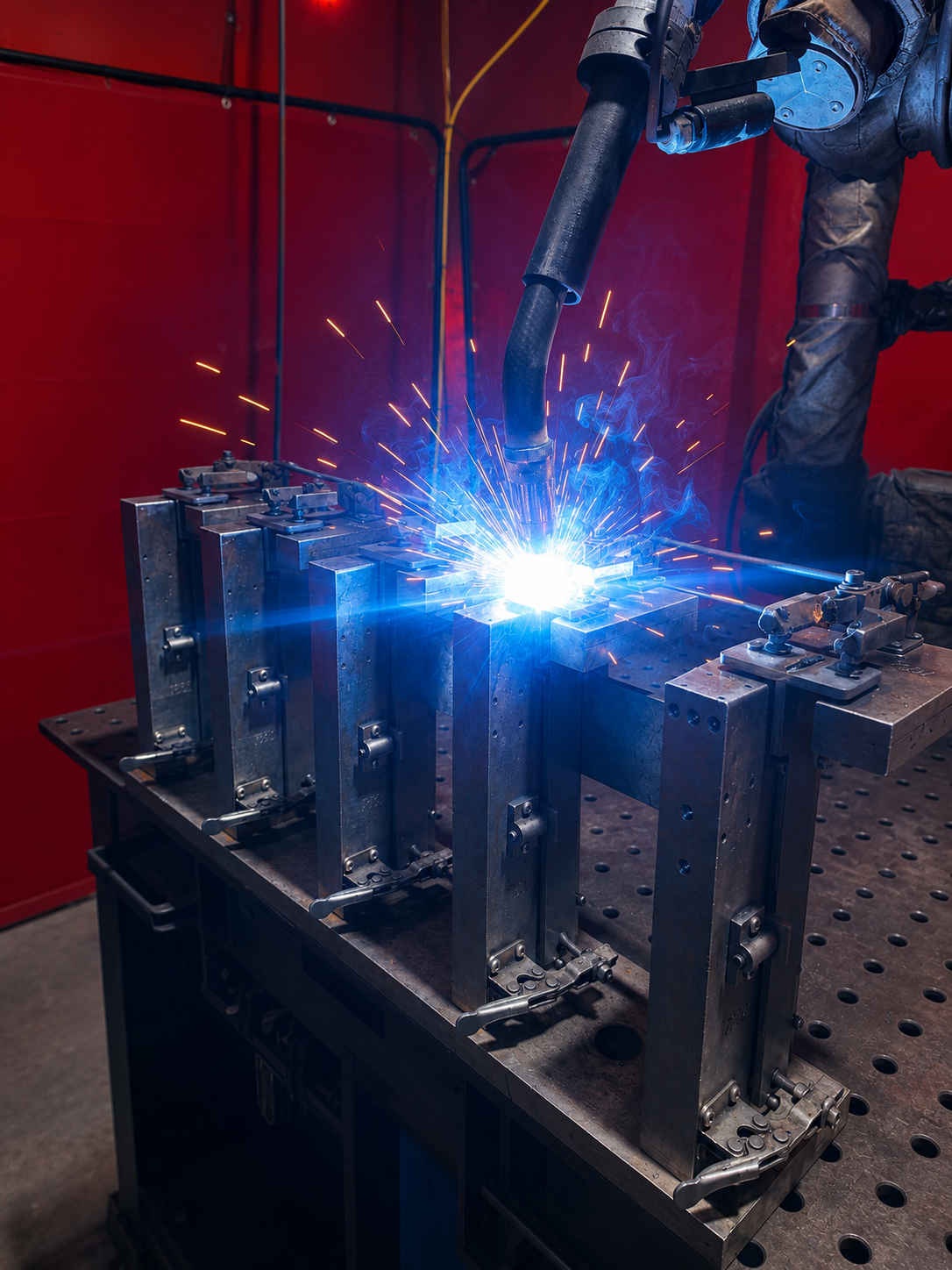
Robotic welding / production integration
Robotic welding succeeds when the fixture, part presentation, torch access, weld sequence, controls, and operator workflow are engineered as one production system.
The real engineering problem
A productive robotic weld cell depends on controlled part location, repeatable clamping, clear torch access, reliable sequencing, safe loading, and a layout that can actually be operated and maintained.
LaserX Design approaches the fixture and the robot together, carrying the work from manufacturing intent through physical setup, fit-up, testing, and production refinement.
Part location, clamp access, torch clearance, distortion control, and repeatable loading designed into the workholding system.
Reach, joint posture, gun angle, cable routing, collision risk, and service access evaluated around the real weld sequence.
Loading, unloading, sequencing, verification, changeover, and operator interaction considered as part of one complete cell.
Cell and fixture development
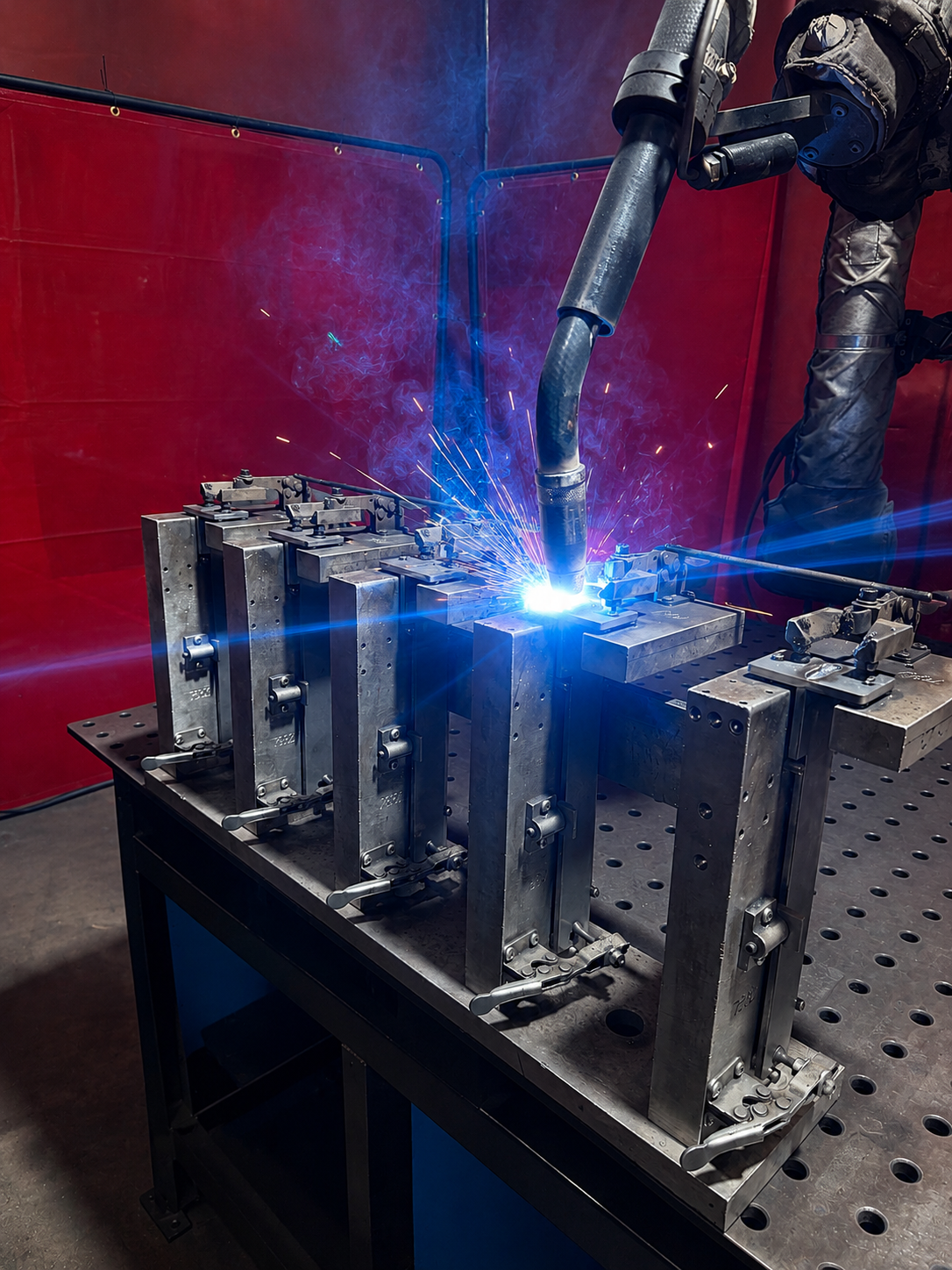
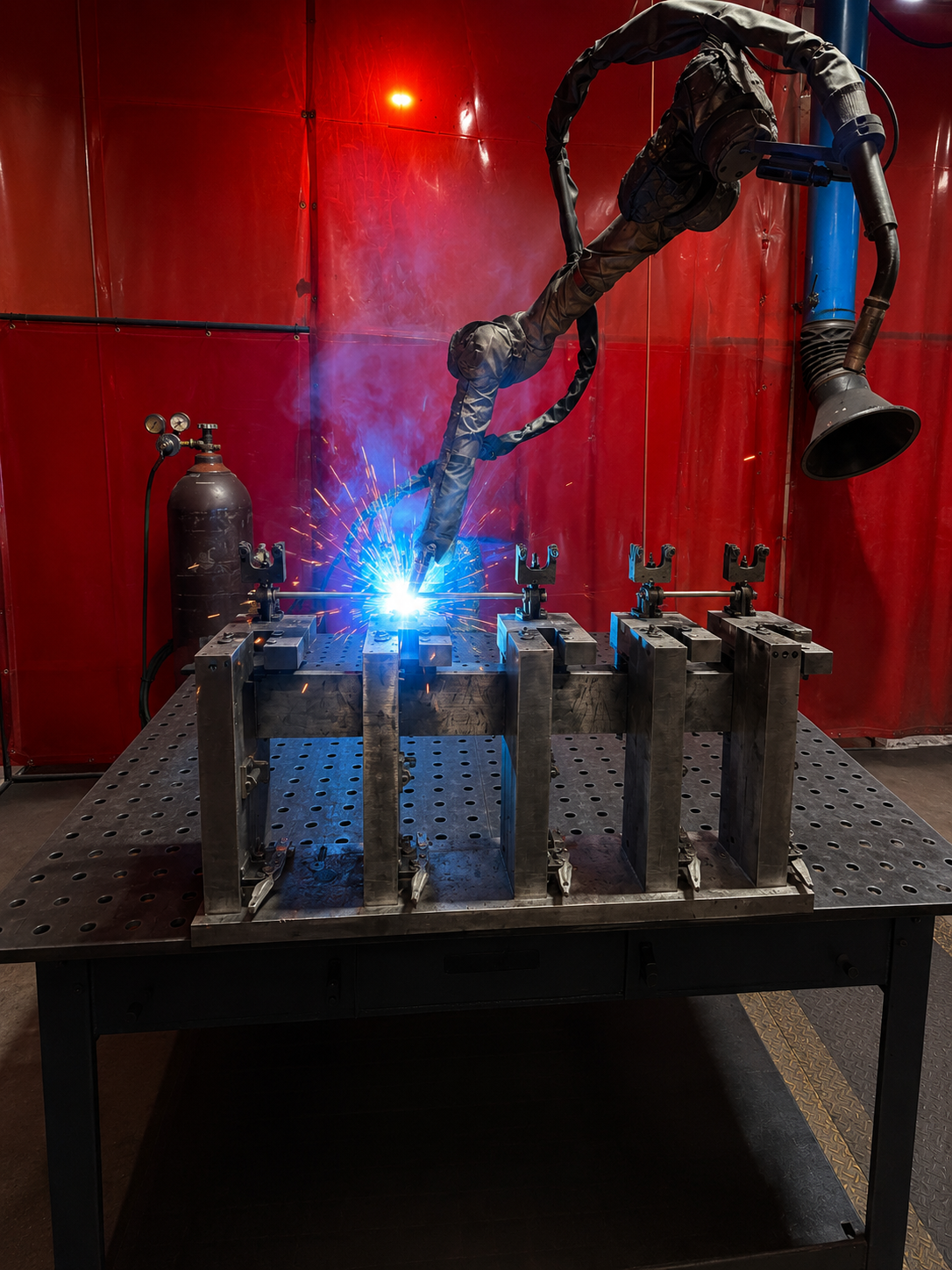
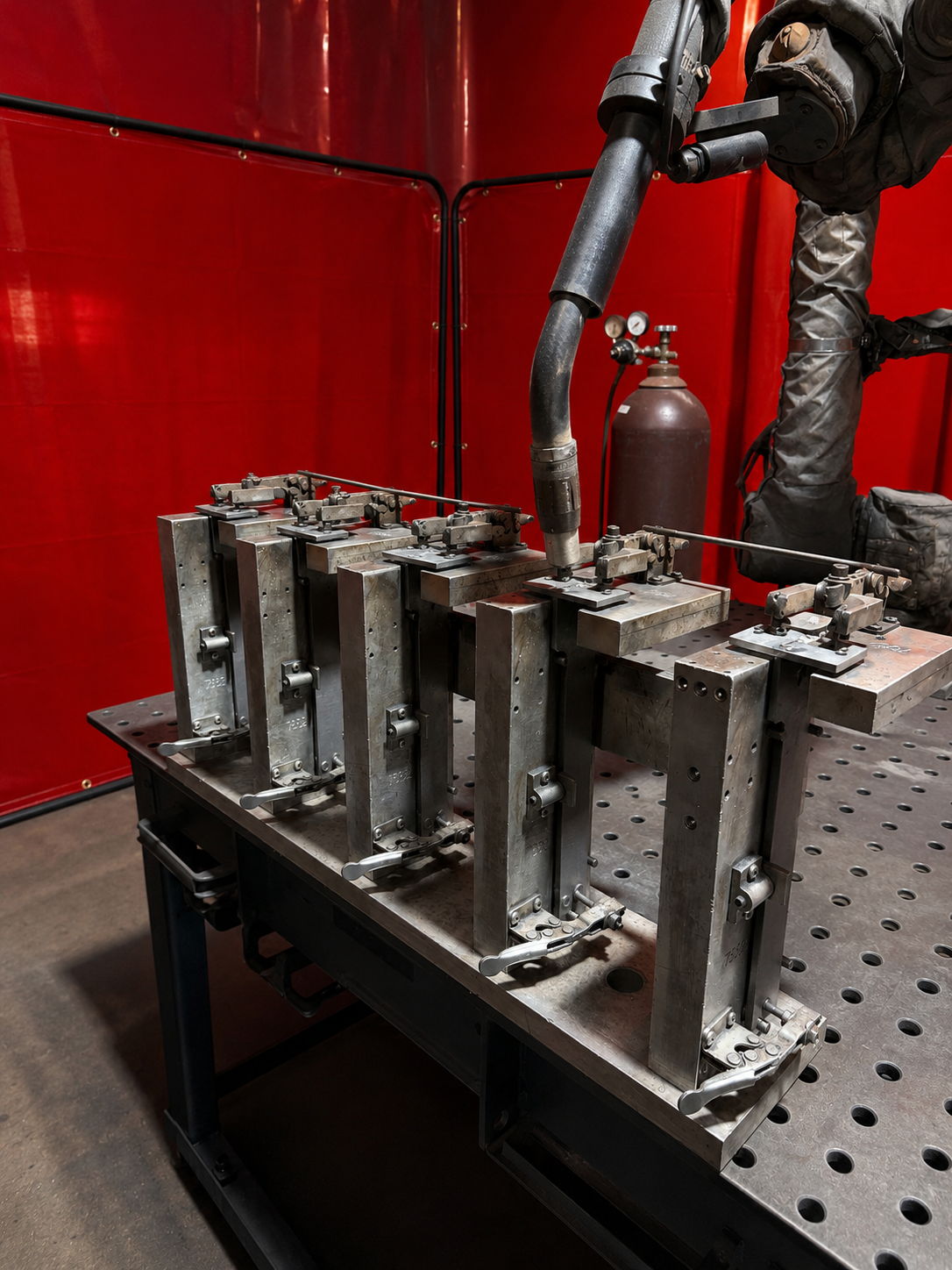
The visuals below document the core layers of the system: robotic welding, fixture architecture, workholding, access, and production-minded layout.
Integration path
Understand the part, weld requirements, volume, quality risks, operator needs, and available equipment.
Create controlled location, clamping, support, access, and mistake-proofing around the assembly.
Position the robot, prove reach and torch angles, organize cables, and connect the cell around the fixture.
Run the sequence, inspect results, refine the setup, and prepare the process for repeatable production.
The target
The goal is not simply to make the robot move. The goal is a production system that locates the assembly, provides weld access, controls variation, supports inspection, and can be loaded, run, serviced, and improved by the people responsible for output.
Bring us the process ↗